
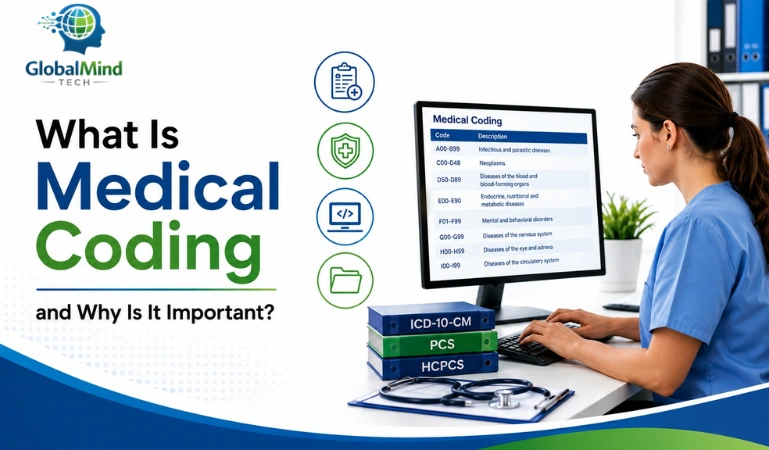
Healthcare involves much more than diagnosing patients and providing treatment. Every consultation, test, diagnosis, procedure, medication, and medical service must also be recorded accurately. This is where medical coding becomes important.
So, what is medical coding? Medical coding is the process of converting information from a patient’s medical record into standardised alphanumeric or numeric codes. These codes represent diagnoses, procedures, treatments, medical equipment, and other healthcare services.
Medical coding gives healthcare providers, insurance companies, government programmes, and other organisations a common way to describe the care a patient receives. Without accurate coding, healthcare claims can be delayed, denied, or processed incorrectly.
Understanding the medical coding definition also helps explain why coding is such an important part of healthcare administration and the revenue cycle.
What Is Medical Coding?
In simple terms, what is medical coding can be answered as the translation of healthcare information into recognised medical codes.
During a patient visit, a doctor or other healthcare professional documents information such as:
- Delayed claims
- Denied or rejected claims
- Additional administrative work
- Incorrect reimbursement
- Inaccurate healthcare data
- Compliance concerns
- More time spent correcting and resubmitting claims
A medical coder reviews this documentation and selects the codes that correctly represent the services and diagnoses recorded in the patient’s medical record.
For example, instead of an insurance claim containing only a written description of a patient’s diagnosis or treatment, the relevant standardised codes are submitted.
The CDC explains that ICD-10-CM is the standardised system used in the United States to code and classify medical diagnoses.
This standardisation allows healthcare information to be communicated more consistently.
Medical Coding Definition in Simple Words
A simple medical coding definition is:
Medical coding is the process of converting diagnoses, procedures, services, and other information documented during healthcare into standardised medical codes.
Medical records may contain long clinical notes written by healthcare professionals. Coding turns relevant parts of this information into a structured format that can be used for billing, reporting, insurance claims, and healthcare data management.
When people ask what does medical coding mean, they are essentially asking how healthcare organisations turn clinical documentation into a language that healthcare systems and payers can understand consistently.
How Does Medical Coding Work?
To have medical coding explained clearly, it helps to look at the process step by step.
The process normally begins after a patient receives healthcare services.
1. The Healthcare Provider Documents the Visit
The physician or other qualified healthcare professional records the patient’s condition, diagnosis, treatment, tests, procedures, and other relevant details.
Good documentation is essential because coders assign codes based on what is supported in the patient’s medical record.
2. The Medical Coder Reviews the Documentation
The coder examines the available clinical information.
This may include physician notes, laboratory results, procedure reports, discharge summaries, imaging reports, and other relevant records.
3. The Correct Codes Are Selected
The coder identifies the diagnoses and services documented and assigns the appropriate codes using recognised coding systems.
The coder must follow the rules and guidelines that apply to each code set.
4. Codes Become Part of the Claim
The assigned codes can then be used as part of the medical billing process.
This is where medical coding and billing connect closely. Coding identifies what happened clinically, while billing uses that information to prepare and submit claims.
If you want to understand the distinction in more detail, read Medical Billing vs Medical Coding: What Is the Difference?.
5. The Payer Reviews the Claim
Insurance companies and other payers review the information submitted on the claim when determining how it should be processed according to applicable coverage, coding, and payment rules.
This is why accurate documentation and code selection are so important.
What Are the Main Medical Coding Systems?
Another important part of having medical coding explained is understanding that there is not just one type of code.
Different coding systems are used for different types of healthcare information.
ICD-10-CM
ICD-10-CM stands for International Classification of Diseases, Tenth Revision, Clinical Modification.
It is used to code and classify diagnoses and medical conditions.
For example, ICD-10-CM codes may represent conditions involving diabetes, hypertension, infections, injuries, respiratory disorders, or many other health problems.
CPT Codes
CPT stands for Current Procedural Terminology.
According to the American Medical Association, the CPT code set contains terms and five-digit codes used primarily to describe medical services and procedures performed by physicians and other qualified healthcare professionals.
CPT codes can represent services such as office visits, laboratory procedures, diagnostic services, surgeries, and many other types of care.
HCPCS Codes
HCPCS stands for Healthcare Common Procedure Coding System.
CMS states that standardized coding systems are important for allowing Medicare and other health insurance programmes to process claims consistently. HCPCS includes two main levels, with Level I consisting of CPT and Level II covering additional healthcare products, supplies, and services.
Using the right coding system and the correct code within that system is a key responsibility in medical coding.
Why Is Medical Coding Important?
Now that we understand what is medical coding, the next question is why healthcare organisations depend on it.
Medical coding affects several important parts of healthcare operations.
It Supports Accurate Medical Billing
Healthcare providers need a structured way to communicate the services they delivered when submitting claims.
Medical codes provide that structure.
Accurate coding helps the billing team prepare claims that reflect the documented services. Incorrect or incomplete coding can contribute to claim problems and additional administrative work.
To understand what happens after coding, see What Are Medical Billing Services? How Does the Process Work?.
It Helps Healthcare Providers Receive Appropriate Reimbursement
Healthcare organizations depend on revenue to pay staff, maintain facilities, purchase equipment, and continue treating patients.
Codes communicate information about the diagnoses and services documented during care.
If services are coded incorrectly, the claim may not accurately represent what was provided. Accurate coding therefore plays an important role in supporting appropriate reimbursement based on documented services and applicable payer requirements.
It Helps Reduce Coding-Related Claim Problems
Errors can create complications during claim processing.
For example, problems may occur when a code does not match the documentation, an outdated or incorrect code is selected, or required information is missing.
Careful coding can help reduce avoidable errors before a claim reaches the payer.
It Creates Consistent Healthcare Information
Doctors may describe similar conditions in different ways when writing clinical notes.
Standardized coding provides a more consistent way of representing diagnoses and healthcare services.
This is one of the biggest reasons what does medical coding mean goes beyond simply “creating bills.” Coding creates a structured language for healthcare information.
CPT, for example, provides a uniform nomenclature that helps healthcare professionals, payers, regulators, vendors, and other stakeholders communicate about healthcare services.
It Supports Healthcare Data and Reporting
Medical codes also help organise large amounts of healthcare information.
When diagnoses and services are coded consistently, organisations can use coded information for reporting, analysis, quality-related activities, and administrative decision-making.
This means coding has value beyond individual insurance claims.
Medical Coding vs Medical Billing
Medical coding and medical billing work together, but they are different processes.
Medical coding focuses mainly on reviewing clinical documentation and translating relevant information into appropriate codes.
Medical billing focuses on using patient, insurance, service, and coding information to prepare and manage healthcare claims and payments.
A simple way to understand the difference is:
Medical coding: What diagnosis or service is documented, and which code represents it?
Medical billing: How is the coded service submitted and managed for payment?
The two functions are closely connected. A billing team depends on accurate coding, while coders depend on clear and complete clinical documentation.
You can also read What Does a Medical Biller Do? A Complete Guide to understand the billing side of the revenue cycle.
Who Performs Medical Coding?
Medical coding is generally performed by professionals who understand medical terminology, anatomy, clinical documentation, coding guidelines, and healthcare code sets.
A coder must do more than simply search for a diagnosis and choose the first available code.
They need to review the complete documentation, understand the context of the patient’s care, and apply the relevant coding rules.
Medical coding also changes over time. Code sets and guidelines are updated, so professionals involved in coding need to work with current information. CMS provides updated ICD-10 resources and coding guidelines, while the AMA maintains the CPT code set.
Why Is Accurate Documentation Important for Medical Coding?
Medical coders can only code what is supported by the documentation available to them.
If clinical documentation is incomplete, unclear, or inconsistent, selecting the correct code can become difficult.
Accurate documentation should clearly reflect the patient’s condition and the healthcare services that were provided.
Official ICD-10-CM guidance also emphasises cooperation between healthcare providers and coders to achieve complete and accurate documentation, code assignment, and reporting.
This shows why medical coding is not an isolated administrative task. It depends on communication between clinical and administrative teams.
What Can Happen When Medical Coding Is Incorrect?
Incorrect coding can affect several areas of healthcare administration.
Possible problems include:
- Delayed claims
- Denied or rejected claims
- Additional administrative work
- Incorrect reimbursement
- Inaccurate healthcare data
- Compliance concerns
- More time spent correcting and resubmitting claims
Errors can occur for many reasons. A coder may use an outdated code, misunderstand documentation, overlook important clinical information, or select a code that is not fully supported by the medical record.
Consistent coding practices, quality reviews, trained staff, clear documentation, and current coding resources can help organisations reduce these risks.
Why Medical Coding Matters in the Healthcare Revenue Cycle
The healthcare revenue cycle includes the administrative and financial processes involved in providing services and receiving payment.
Medical coding sits between clinical documentation and medical billing.
A patient first receives care. The healthcare provider documents that care. The documentation is reviewed and coded. The codes then become part of the information used in the billing and claims process.
This makes medical coding an important connection between clinical care and healthcare finance.
Understanding this connection gives a more complete answer to what is medical coding and why healthcare providers need accurate coding processes.
Final Thoughts
So, what is medical coding?
It is the process of converting documented diagnoses, procedures, treatments, and healthcare services into recognised medical codes.
The medical coding definition may sound simple, but the work itself requires knowledge, accuracy, attention to detail, and an understanding of coding rules.
When medical coding explained in the context of the wider healthcare system, its importance becomes clear. Coding helps standardise healthcare information, supports billing and claim processing, contributes to accurate healthcare data, and connects clinical documentation with the financial side of healthcare.
For anyone asking what does medical coding mean, it is best understood as the structured language that helps turn a patient’s documented care into information that healthcare systems can consistently process and communicate.
Frequently Asked Questions
What is medical coding in simple terms?
What is medical coding in simple terms? It is the process of turning information from medical records, such as diagnoses and procedures, into standardised codes. These codes are used in healthcare administration, reporting, and insurance claims.
What does medical coding mean in healthcare?
If you are wondering what does medical coding mean, it means translating documented healthcare information into recognised code sets. This provides a consistent way for healthcare providers, payers, and other organisations to identify diagnoses and services.
Why is medical coding important?
Medical coding is important because it supports accurate healthcare claims, reimbursement, standardised health information, data reporting, and efficient healthcare administration.
What is the difference between medical coding and medical billing?
Medical coding converts clinical documentation into appropriate medical codes. Medical billing uses those codes, along with other patient and insurance information, to create, submit, and manage healthcare claims.
What are the main types of medical codes?
Common coding systems in the United States include ICD-10-CM for diagnoses, CPT for many medical services and procedures, and HCPCS for additional healthcare services, supplies, products, and equipment.
Is medical coding only used for insurance claims?
No. Claims are an important use of medical coding, but coded healthcare information also supports reporting, data organisation, administrative processes, and analysis.
Can incorrect medical coding cause claim denials?
Coding errors can contribute to claim denials or processing problems. Claims can also be denied for many other reasons, including coverage, eligibility, documentation, authorisation, and payer-specific requirements.
Why do medical codes change?
Healthcare services, technology, procedures, and reporting needs change over time. Coding organisations therefore update their code sets and guidance periodically. Coders need to use the versions and rules applicable to the services they are coding.
What skills does a medical coder need?
Medical coders need attention to detail and knowledge of medical terminology, anatomy, clinical documentation, coding systems, and applicable coding guidelines. They must also be able to review records carefully and select codes supported by the documentation.
Why are medical coding and clinical documentation connected?
Medical codes are assigned based on the information recorded in the patient’s medical record. Clear and complete clinical documentation gives coders the information they need to make accurate code selections.