
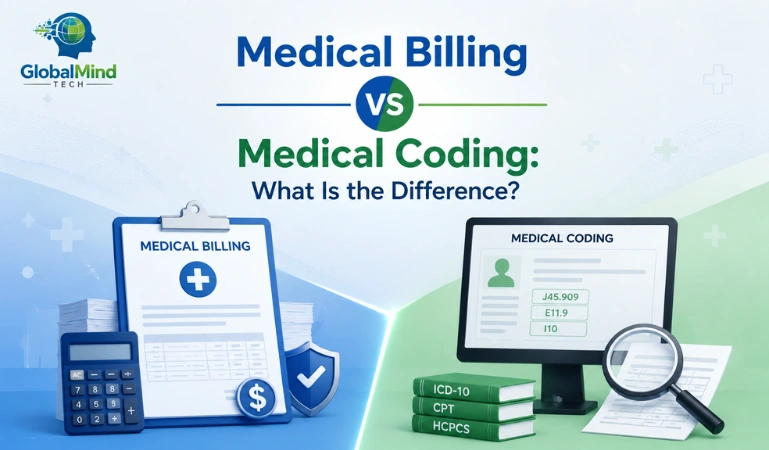
Medical billing and medical coding are two essential parts of the healthcare revenue cycle, but they are not the same job. Both processes help healthcare providers receive accurate reimbursement for the services they provide, yet each has different responsibilities.
Understanding the difference between medical billing and coding can help healthcare providers, practice managers, and anyone interested in healthcare administration understand how claims move from a patient visit to payment.
While medical coding focuses on translating clinical information into standardized codes, medical billing focuses on using that information to prepare claims, communicate with insurance companies, and manage payments.
This guide explains medical billing vs coding, how each process works, where they overlap, and why both are important to a successful revenue cycle.
What Is Medical Coding?
Medical coding is the process of converting information from a patient’s medical record into standardized healthcare codes. Medical coders review documentation such as diagnoses, procedures, treatments, and services provided during a patient encounter.
They then assign the appropriate codes according to established coding systems and current guidelines.
Common coding systems include:
- ICD-10-CM for diagnoses
- CPT for many physician and outpatient services
- HCPCS Level II for certain products, services, and supplies
Accurate coding creates the foundation for the billing process. The codes communicate what condition was treated and what services were provided.
For example, if a patient visits a physician for a documented condition and receives a specific procedure, the coder reviews the medical record and assigns the codes that accurately represent the documented services and diagnosis.
Medical coders must pay close attention to documentation because incorrect or unsupported codes can contribute to claim delays, denials, compliance concerns, or inaccurate reimbursement.
What Is Medical Billing?
Medical billing is the process of preparing and submitting claims to insurance companies or other payers and managing the financial side of healthcare services.
After services are documented and coded, medical billing professionals use the relevant information to create and submit claims. They may also verify insurance information, track claim status, respond to payer requests, post payments, and follow up on unpaid claims.
The medical billing process can involve several steps, including:
- Patient registration
- Insurance verification
- Charge entry
- Medical coding
- Claim creation
- Claim submission
- Claim processing by the payer
- Payment posting
- Denial management
- Accounts receivable follow-up
- Patient billing when applicable
The goal is to help healthcare providers receive appropriate payment while maintaining accurate financial records.
What Is the Difference Between Medical Billing and Coding?
The primary difference between medical billing and coding is their role in the revenue cycle.
Medical coding translates clinical documentation into standardized codes. Medical billing uses those codes and other patient and insurance information to submit claims and manage reimbursement.
A simple way to understand the distinction is:
Medical coding = translating healthcare services and diagnoses into codes.
Medical billing = using that information to obtain payment.
Although these functions are closely connected, they require different knowledge and responsibilities.
Medical Billing vs Coding: Key Differences
When comparing medical billing vs coding, several important differences stand out.
Primary Responsibility
Medical coders focus on reviewing clinical documentation and assigning accurate codes.
Medical billers focus on claims, payer communication, payment processing, denials, and accounts receivable.
Type of Information Used
Coders primarily work with medical records, provider documentation, diagnoses, procedures, and coding guidelines.
Billers work with coded claims, patient information, insurance details, payer requirements, payments, and outstanding balances.
Main Goal
The goal of coding is to accurately represent documented medical services and diagnoses using standardized codes.
The goal of billing is to help ensure claims are correctly prepared, submitted, processed, and paid.
Compliance
Coders must follow applicable coding guidelines and ensure codes are supported by documentation.
Billers must follow payer requirements, billing rules, insurance policies, and applicable healthcare regulations.
Interaction With Insurance Companies
Medical billers generally have more direct interaction with insurance companies. They may check claim status, respond to payer requests, investigate denials, and follow up on unpaid claims.
Coders may not routinely communicate with payers, although coding expertise can be important when addressing coding-related claim issues.
Medical Billing and Coding Difference in the Healthcare Revenue Cycle
The medical billing and coding difference becomes easier to understand when looking at the complete revenue cycle.
A patient first receives healthcare services. The provider documents the encounter in the medical record. A coder then reviews the documentation and assigns appropriate codes.
The coded information is passed into the billing process. The biller uses the information to prepare and submit the claim to the appropriate payer.
The insurance company reviews the claim and determines payment based on factors such as coverage, benefits, contract terms, medical necessity, and claim information.
After the payer processes the claim, the biller posts the payment and reviews any remaining balance or denial. If a claim is denied or remains unpaid, additional follow-up may be required.
This workflow demonstrates why coding and billing need to work together.
How Medical Coding Works
Medical coding begins with documentation.
A coder may review:
- Patient history
- Examination findings
- Diagnoses
- Procedures
- Treatment details
- Laboratory or diagnostic services
- Provider notes
The coder then determines which codes accurately represent the documented encounter.
Coding should be based on the medical record rather than assumptions. Coders must understand coding guidelines and recognize when documentation may require clarification.
Accurate coding can support cleaner claims and reduce avoidable billing problems.
How Medical Billing Works
Medical billing begins after relevant clinical and coding information is available.
A biller may review the patient’s insurance information and claim details before submitting the claim. The claim is then sent electronically or through another approved method to the payer.
After submission, the biller may monitor the claim and address issues that arise during processing.
If the payer denies the claim, the biller may investigate the reason, correct an identified issue when appropriate, and submit an appeal or corrected claim according to payer requirements.
Payment posting is another important part of billing. Payments and adjustments are recorded so the practice has an accurate view of its financial position.
Which Comes First: Medical Billing or Medical Coding?
In a typical healthcare revenue cycle, coding generally comes before claim submission and many billing activities.
The provider documents the patient’s encounter first. The coder then reviews the documentation and assigns appropriate codes. The billing team uses the coded information to prepare and submit the claim.
However, billing and coding are not always completely separate or strictly linear. Some organizations combine responsibilities, and billing teams may perform tasks before coding is completed, such as registration and insurance verification.
The exact workflow can vary by healthcare organization, specialty, and practice management system.
Why Accurate Medical Coding Matters
Coding errors can affect the billing process and ultimately a healthcare organization’s revenue.
Incorrect or incomplete codes may contribute to:
- Claim denials
- Payment delays
- Incorrect reimbursement
- Compliance risks
- Rework
- Patient billing problems
Accurate coding depends on complete provider documentation and knowledgeable coding practices.
Healthcare organizations should maintain appropriate coding processes, provide staff education, and monitor coding accuracy regularly.
Why Accurate Medical Billing Matters
Even when coding is accurate, billing problems can prevent a practice from receiving timely reimbursement.
Common billing issues can include:
- Incorrect patient information
- Insurance eligibility problems
- Missing claim information
- Incorrect payer details
- Claim submission errors
- Unresolved denials
- Delayed follow-up
- Incorrect payment posting
Effective billing processes help practices identify these problems and address them efficiently.
For organizations looking to improve their overall revenue cycle, understanding medical billing vs coding is an important starting point.
Can Medical Billing and Coding Be Done by the Same Person?
Yes. In some smaller healthcare practices, one employee may handle both billing and coding responsibilities.
However, larger organizations may separate these roles because each requires specialized knowledge.
Whether responsibilities are combined depends on factors such as practice size, specialty, claim volume, staffing, technology, and organizational structure.
Separating billing and coding can allow professionals to focus on their respective areas of expertise, while combining them may be practical for smaller practices with lower claim volumes.
Medical Biller vs Medical Coder
A medical coder primarily works with clinical documentation and standardized healthcare codes.
A medical biller focuses more heavily on claims and reimbursement.
For example, a coder may determine which diagnosis and procedure codes are supported by a patient’s documentation. A biller may then use that information to submit the claim, monitor its status, resolve billing issues, and post the resulting payment.
Both roles require attention to detail, knowledge of healthcare processes, and an understanding of how documentation affects reimbursement.
Why Healthcare Providers Need Both
Healthcare providers need accurate coding and effective billing to maintain a healthy revenue cycle.
Coding helps communicate clinical information in a standardized format. Billing uses that information to communicate with payers and manage reimbursement.
A weakness in either process can affect the other.
For example, an incorrect code may result in a claim denial. Similarly, accurate coding may still result in delayed payment if the claim contains incorrect insurance information or is not properly followed up.
This is why healthcare organizations often monitor both coding accuracy and billing performance.
How Technology Supports Medical Billing and Coding
Modern healthcare organizations often use electronic health records, practice management systems, clearinghouses, and revenue cycle management technology to support billing and coding workflows.
Technology can help with tasks such as:
- Patient data management
- Eligibility verification
- Charge capture
- Claim preparation
- Electronic claim submission
- Claim tracking
- Payment posting
- Reporting
- Accounts receivable monitoring
However, technology does not eliminate the need for knowledgeable professionals. Coding and billing still require human review, appropriate documentation, compliance awareness, and attention to payer-specific requirements.
How Outsourcing Can Support Billing and Coding
Healthcare practices may choose to manage billing and coding internally or work with an external medical billing company.
Outsourcing can provide access to specialized staff and established revenue cycle processes without requiring a practice to manage every administrative function internally.
For example, Global Mind Tech provides medical billing and revenue cycle support designed to help healthcare providers manage administrative and financial processes more efficiently. Professional support can include areas such as claims management, coding, insurance verification, payment posting, and accounts receivable follow-up.
The right approach depends on a practice’s size, staffing, specialty, technology, and revenue cycle needs.
Frequently Asked Questions
Is medical billing the same as medical coding?
No. Medical billing and coding are related but different functions. Coding converts clinical documentation into standardized codes, while billing uses that information to submit claims and manage reimbursement.
What is the main difference between medical billing and coding?
The main difference between medical billing and coding is their purpose. Coding focuses on accurately representing diagnoses and services with standardized codes, while billing focuses on claims, payer communication, payments, and reimbursement.
Which comes first, medical billing or coding?
In a typical workflow, coding occurs before a claim is submitted. However, some billing activities, such as insurance verification and patient registration, can happen before coding.
What does a medical coder do?
A medical coder reviews healthcare documentation and assigns appropriate diagnosis, procedure, and service codes based on the documentation and applicable coding guidelines.
What does a medical biller do?
A medical biller prepares and submits claims, monitors claim status, manages denials, posts payments, communicates with payers, and follows up on outstanding balances.
Can one person do both medical billing and coding?
Yes. In some smaller practices, one professional may handle both functions. Larger healthcare organizations often separate the roles because billing and coding require different areas of expertise.
Why are medical billing and coding important?
Medical billing and coding help healthcare providers accurately document services, submit claims, receive reimbursement, and maintain an organized revenue cycle.
Final Thoughts
Understanding the difference between medical billing and coding is important for anyone involved in healthcare administration or revenue cycle management. Although these functions work closely together, they have distinct responsibilities.
Medical coding focuses on translating clinical documentation into standardized codes, while medical billing focuses on claims, payer communication, payment posting, denials, and reimbursement.
A well-managed revenue cycle depends on both functions working accurately and efficiently. Strong documentation, knowledgeable professionals, appropriate technology, and consistent processes can help reduce avoidable errors and support better financial performance.
For healthcare practices that need additional administrative support, Global Mind Tech offers medical billing and revenue cycle management services to help providers manage billing operations and focus more of their time on patient care.
Frequently Asked Questions
1. What is the difference between medical billing and coding?
The main difference between medical billing and coding is their role in the healthcare revenue cycle. Medical coding converts diagnoses and healthcare services into standardized codes, while medical billing uses that information to submit claims and manage payments from insurance companies and patients.
2. Is medical billing the same as medical coding?
No. Medical billing vs coding involves two separate but connected functions. Medical coders focus on clinical documentation and assigning accurate codes, while medical billers focus on claims, insurance communication, payment posting, denials, and reimbursement.
3. Which comes first, medical billing or coding?
Medical coding generally comes before claim submission. After a healthcare provider documents a patient’s visit, the coder reviews the documentation and assigns appropriate codes. The billing team then uses the coded information to prepare and submit the claim.
4. What does a medical coder do?
A medical coder reviews patient records and translates documented diagnoses, procedures, and healthcare services into standardized medical codes. Coders must follow applicable coding guidelines and ensure that assigned codes are supported by the available documentation.
5. What does a medical biller do?
A medical biller handles the financial side of the healthcare revenue cycle. Responsibilities can include preparing and submitting claims, checking claim status, communicating with insurance companies, managing denials, posting payments, and following up on outstanding balances.
6. Why are medical billing and coding important?
Medical billing and coding help healthcare providers accurately communicate the services they provide and receive appropriate reimbursement. Accurate coding supports clean claims, while effective billing helps reduce payment delays, manage denials, and maintain a healthier revenue cycle.
7. Can one person handle both medical billing and coding?
Yes. In smaller medical practices, one employee may handle both billing and coding responsibilities. Larger organizations often separate these roles because each requires specialized knowledge and different day-to-day responsibilities.
8. Is medical coding harder than medical billing?
Neither role is universally harder. Both require attention to detail and specialized knowledge. Coding involves understanding clinical documentation and coding guidelines, while billing requires knowledge of claims, payer requirements, reimbursement processes, and accounts receivable management.
9. How do medical billing and coding work together?
Medical billing and coding work together as connected parts of the revenue cycle. Coding provides accurate information about diagnoses and services, while billing uses that information to prepare claims, communicate with payers, track payments, and resolve reimbursement issues.
10. Can medical billing and coding errors cause claim denials?
Yes. Coding errors, incorrect patient information, missing documentation, insurance issues, and other claim problems can contribute to denials or payment delays. Regular quality checks and effective revenue cycle processes can help identify and reduce avoidable errors.